
Moving out of a commercial office in Singapore involves more than removing desks, computers and office equipment. In many commercial leases, tenants are required to return the premises to an agreed condition before handing the space back to the landlord.
This process is commonly known as office reinstatement in Singapore.
Office reinstatement may involve removing tenant-installed fixtures, dismantling partitions, restoring walls, repairing surfaces, clearing unwanted installations and returning parts of the premises to their previous condition. The exact requirements depend on the tenancy agreement, the original condition of the premises and the landlord’s handover requirements.
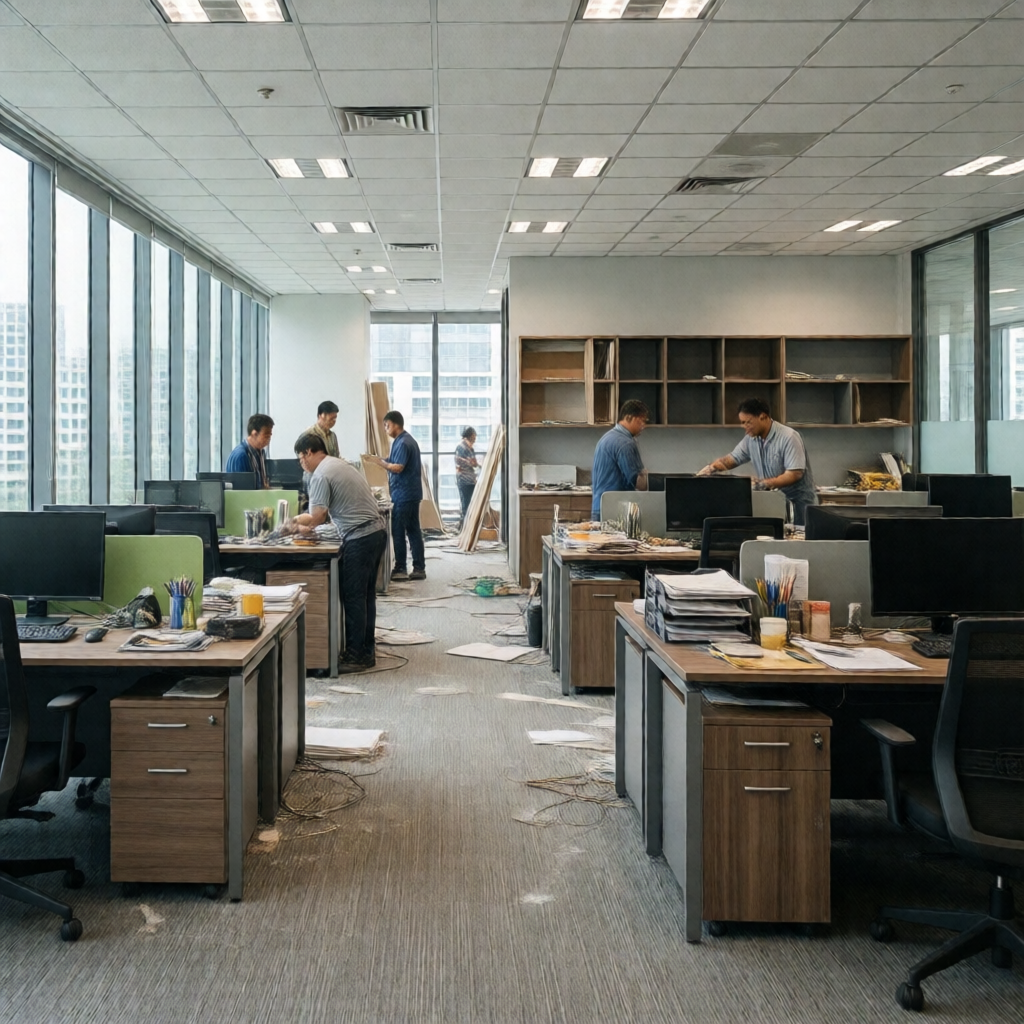
For businesses approaching the end of a commercial lease, understanding the reinstatement process early can help avoid unnecessary delays, unexpected work and last-minute problems.
Table of Contents
- What Is Office Reinstatement in Singapore?
- Why Do Commercial Tenants Need Reinstatement?
- What Does Office Reinstatement Usually Involve?
- Start by Reviewing Your Tenancy Agreement
- Inspect the Office Before Starting Work
- Create an Office Reinstatement Scope
- Plan the Work Around Your Moving Date
- Common Problems That Can Delay Handover
- How to Prepare for the Final Inspection
- Choosing an Office Reinstatement Contractor
- Final Office Reinstatement Checklist
- Conclusion
1. What Is Office Reinstatement in Singapore?
Office reinstatement is the process of restoring a rented commercial office before the tenant returns the premises to the landlord.
During a tenancy, a business may make various changes to the office to accommodate its operations. These could include partitions, meeting rooms, feature walls, additional flooring, built-in structures, signage, workstations and other installations.
When the lease ends, some or all of these modifications may need to be removed.
The purpose of office reinstatement Singapore services is therefore to help tenants prepare the premises for handover according to the agreed tenancy requirements.
The work required can vary significantly between offices. A small office may require relatively straightforward removal and repair work, while a larger commercial unit may require extensive dismantling and restoration.
2. Why Do Commercial Tenants Need Reinstatement?
Commercial leases often contain specific requirements regarding the condition in which the premises must be returned.
A tenant may have received the office in a relatively open condition before carrying out its own renovation or fit-out works. During the tenancy, the business may then have installed partitions, flooring, lighting, built-in furniture and other features.
The landlord may require these additions to be removed before the premises are returned.
This is why tenants should not assume that simply clearing their furniture is enough.
A proper office reinstatement in Singapore may require work to several areas of the premises, depending on the agreed handover condition.
Starting the process early gives the tenant time to identify what needs to be removed, what needs to be repaired and what should remain.
3. What Does Office Reinstatement Usually Involve?
There is no single reinstatement package that applies to every commercial office.
The scope depends on the tenancy agreement and the condition required by the landlord.
Common work may include:
Removing office partitions
Glass, gypsum board or other partition systems installed during the tenancy may need to be dismantled.
Removing built-in structures
Reception counters, storage units, cabinets and other fixed installations may need to be removed if they were added by the tenant.
Restoring walls
After partitions, fixtures or fittings are removed, walls may have holes, fixing points or surface damage. Appropriate repair work may be required.
Restoring flooring
Tenant-installed flooring or other floor finishes may need to be removed or repaired depending on the handover requirements.
Removing signage
Company logos, room signs and other tenant-specific signage may need to be removed.
Clearing unwanted installations
Certain electrical, mechanical or other tenant-installed items may need to be removed depending on the building’s requirements and the agreed scope.
Cleaning and disposal
After dismantling and restoration works, construction debris and unwanted materials should be properly cleared from the premises.
The actual requirements should always be confirmed before work begins.
4. Start by Reviewing Your Tenancy Agreement
One of the most important steps is to understand your reinstatement obligations before starting work.
The tenancy agreement may contain clauses describing how the premises should be returned. There may also be additional requirements communicated by the landlord or building management.
Look for information relating to:
- Removal of tenant improvements
- Restoration of walls and surfaces
- Removal of partitions
- Flooring requirements
- Fixtures and fittings
- Signage
- Electrical installations
- Air-conditioning-related modifications
- Cleaning requirements
- Handover procedures
- Inspection requirements
Do not rely only on assumptions based on what other offices have done.
Two commercial properties may have completely different reinstatement requirements.
If there is uncertainty about a particular installation, clarify the requirement with the landlord, property manager or relevant building management before beginning the work.
5. Inspect the Office Before Starting Work
A detailed inspection can help identify the actual scope of the project.
Walk through the entire office and document the current condition.
Take photographs of:
- Office partitions
- Doors
- Walls
- Flooring
- Ceilings
- Built-in cabinets
- Reception areas
- Meeting rooms
- Signage
- Fixed equipment
- Other tenant-installed features
Compare the current condition with available photographs or records from the beginning of the tenancy if they are available.
This can help establish which elements were part of the original premises and which were installed later.
For larger offices, creating a room-by-room list can make the reinstatement process easier to manage.
6. Create an Office Reinstatement Scope
Once the premises have been inspected, prepare a clear scope of work.
A good scope should identify what needs to be removed, what needs to be restored and what needs to be retained.
For example, a scope may include:
Removal
- Office partitions
- Built-in cabinets
- Reception counter
- Tenant signage
- Additional fixtures
Restoration
- Wall surfaces
- Floor areas
- Ceiling sections
- Door finishes
- Other affected surfaces
Disposal
- Dismantled materials
- Unwanted furniture
- Construction debris
Having a clear scope makes it easier to obtain comparable quotations from office reinstatement contractors in Singapore.
It also reduces the risk of discovering major additional work only after the project has started.
7. Plan the Work Around Your Moving Date
Timing is one of the most important parts of commercial reinstatement.
The reinstatement work often takes place around the same period as the business is moving out. This means several activities may need to be coordinated.
The general sequence could involve:
- Removing office equipment and personal belongings
- Clearing furniture
- Dismantling tenant installations
- Carrying out restoration works
- Removing debris
- Cleaning the premises
- Conducting an internal inspection
- Completing outstanding defects
- Preparing for landlord inspection
- Handing back the premises
The exact sequence will depend on the size and complexity of the office.
Avoid leaving reinstatement work until the final few days of the lease whenever possible. Unexpected repairs, additional requirements or access restrictions can affect the schedule.
Early planning gives you more time to address problems.
8. Common Problems That Can Delay Handover
Several issues can cause delays during an office reinstatement project.
Unclear reinstatement requirements
If the tenant does not understand what the landlord expects, unnecessary work may be completed or important items may be missed.
Hidden damage
Removing partitions and built-in installations can reveal damaged walls, flooring or other surfaces.
Poor coordination
Moving, dismantling, disposal and restoration activities need to be properly coordinated.
Building management requirements
Commercial buildings may have specific requirements regarding working hours, loading access, lift usage, disposal and contractor access.
Last-minute changes
Additional instructions from the landlord during inspection can result in extra work.
For these reasons, tenants should begin planning before the actual move-out date.
9. How to Prepare for the Final Inspection
Before requesting the final landlord inspection, conduct your own inspection first.
Walk through the entire office and compare the completed premises against the agreed reinstatement scope.
Check whether:
- Required partitions have been removed
- Tenant signage has been removed
- Built-in structures have been dismantled where required
- Wall damage has been repaired
- Flooring has been addressed where required
- Debris has been removed
- The premises have been cleaned
- Unwanted tenant installations have been cleared
- Doors and other affected areas are in acceptable condition
It can be useful to create a final checklist rather than relying on memory.
If the landlord identifies defects during the inspection, address them as quickly as possible so that the handover can proceed.
10. Choosing an Office Reinstatement Contractor
Selecting the right contractor can make the process significantly easier.
When comparing office reinstatement Singapore contractors, look beyond the headline quotation.
Consider whether the contractor can handle the complete scope you require, including dismantling, restoration, disposal and coordination.
Ask for a quotation that clearly identifies:
- Work included
- Materials included
- Labour
- Disposal
- Restoration works
- Exclusions
- Estimated project duration
- Additional charges, if applicable
A detailed quotation makes it easier to understand what you are paying for.
It is also useful to provide the contractor with the landlord’s reinstatement requirements before requesting a quotation. This allows the contractor to assess the actual scope rather than estimating based only on the size of the office.
For larger projects, an experienced commercial reinstatement contractor in Singapore may also be able to coordinate different parts of the work more efficiently.
11. Final Office Reinstatement Checklist
Before handing back a commercial office, tenants can use a simple checklist:
Documents
- Review tenancy agreement
- Confirm landlord’s reinstatement requirements
- Confirm building management requirements
- Prepare the reinstatement scope
Site preparation
- Remove business equipment
- Clear personal belongings
- Remove furniture where required
- Identify tenant-installed fixtures
Reinstatement
- Remove required partitions
- Remove tenant signage
- Dismantle required built-in structures
- Restore affected walls
- Address flooring requirements
- Repair other affected surfaces
Final preparation
- Remove construction debris
- Clean the premises
- Conduct an internal inspection
- Rectify outstanding defects
- Prepare for landlord inspection
Handover
- Complete final inspection
- Address any additional requirements
- Return keys and access items as required
- Complete the agreed handover process
12. Conclusion
Office reinstatement is an important part of moving out of a commercial property in Singapore. The work is not simply about removing office furniture. Depending on the tenancy agreement, tenants may need to dismantle installations, remove partitions, restore surfaces and return the premises to an agreed condition.
The best approach is to start early.
Review your tenancy requirements, inspect the premises, prepare a detailed scope and allow enough time for reinstatement, inspection and possible rectification work.
If you are planning office reinstatement in Singapore, a clear project scope and experienced contractor can help make the move-out process more organised and reduce the risk of last-minute problems.
For businesses moving out of larger commercial premises, the same principles apply when arranging commercial reinstatement in Singapore: understand the handover requirements, plan the work carefully and make sure the premises are ready for the final inspection before the lease deadline.