
When a commercial tenancy in Singapore comes to an end, the tenant may be required to return the premises in an agreed condition before handing the space back to the landlord. This process is commonly referred to as commercial reinstatement in Singapore.
Commercial reinstatement can involve much more than clearing furniture from a unit. Depending on the tenancy agreement and the alterations made during the tenancy, tenants may need to remove partitions, dismantle built-in installations, restore affected surfaces, remove signage and clear construction debris.
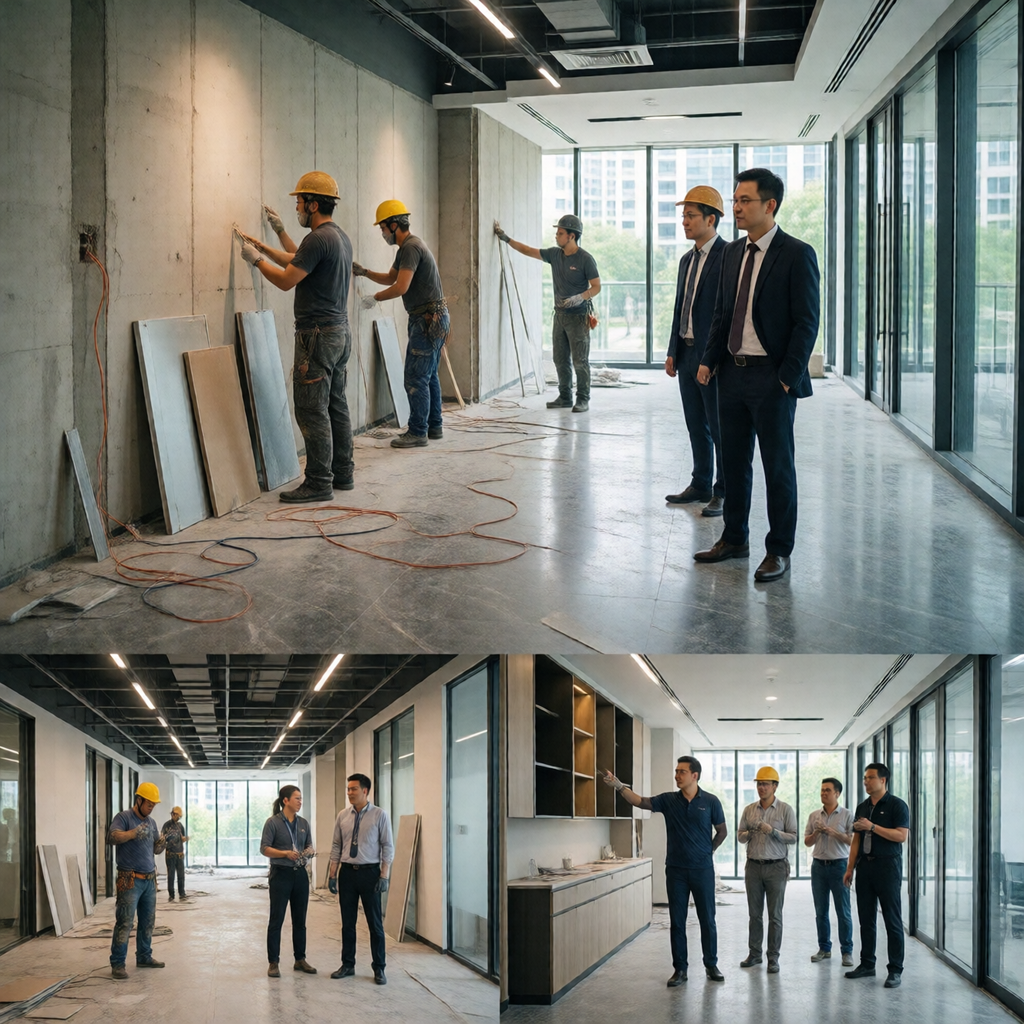
Landlords and tenants should therefore understand the expected handover condition before reinstatement work begins. Proper planning can make the final inspection smoother and reduce the possibility of additional work being required at the last minute.
Table of Contents
- What Is Commercial Reinstatement?
- Why Is Commercial Reinstatement Important?
- What Should Tenants Check Before Starting?
- What Areas May Require Restoration?
- Landlord and Tenant Responsibilities
- Creating a Commercial Reinstatement Scope
- Preparing for the Final Inspection
- Common Handover Problems
- How to Choose a Commercial Reinstatement Contractor
- Commercial Reinstatement Handover Checklist
- Conclusion
1. What Is Commercial Reinstatement?
Commercial reinstatement refers to restoring a rented commercial premises before it is returned to the landlord.
During a tenancy, businesses may modify a property to suit their operations. These modifications could include office partitions, meeting rooms, reception counters, built-in cabinets, flooring, signage and other fixtures.
At the end of the lease, some of these tenant-installed features may need to be removed.
The exact scope depends on the tenancy agreement and the requirements agreed between the landlord and tenant.
A commercial reinstatement Singapore project may therefore range from relatively simple dismantling and cleaning to extensive restoration work across an entire commercial unit.
2. Why Is Commercial Reinstatement Important?
A commercial property is often leased to different businesses over time. The landlord may need the premises returned to a particular condition before the next tenant moves in.
For this reason, tenants should not assume that their existing office fit-out can simply be left behind.
The required handover condition may involve:
- Removal of tenant-installed fixtures
- Dismantling of partitions
- Removal of signage
- Restoration of walls
- Restoration of flooring
- Removal of built-in structures
- Clearing of construction waste
- General cleaning
The exact requirements should be confirmed from the tenancy agreement and instructions provided by the landlord or building management.
Planning the reinstatement early gives both parties an opportunity to identify potential issues before the handover date.
3. What Should Tenants Check Before Starting?
Before engaging a contractor, tenants should first determine exactly what needs to be reinstated.
Start by reviewing the tenancy agreement and any relevant documentation from the beginning of the lease.
If photographs of the original premises are available, they can also be useful when determining which features were already present and which were added by the tenant.
The tenant should identify:
- Original fixtures
- Tenant-installed partitions
- Tenant-installed flooring
- Built-in furniture
- Signage
- Electrical modifications
- Additional installations
- Areas that have been damaged
- Items that the landlord specifically wants removed
If there is uncertainty, clarify the requirements before starting work.
This is particularly important for commercial properties where several parties may be involved, including the landlord, property manager, building management and tenant.
4. What Areas May Require Restoration?
The reinstatement requirements will vary from one commercial property to another.
Partitions
Office partitions are one of the most common elements that may need to be removed.
These could include glass partitions, drywall partitions or other temporary structures installed during the tenant’s occupation.
Walls
After removing fixtures or partitions, walls may have holes, anchor points or other marks.
These areas may require appropriate repair or surface restoration.
Flooring
If the tenant installed a different floor finish during the tenancy, the landlord may require it to be removed or restored depending on the agreed handover condition.
Built-in furniture
Reception counters, cabinets and other fixed furniture may need to be dismantled if they were installed by the tenant.
Signage
Company signs, room labels and other tenant-specific signage may need to be removed.
Ceilings and fixtures
Certain tenant-installed ceiling features, lighting or other fixtures may also need to be addressed depending on the property’s requirements.
Not every item automatically needs to be removed. The important point is to establish the agreed reinstatement scope before work starts.
5. Landlord and Tenant Responsibilities
A successful handover requires clear communication between the landlord and tenant.
The tenant is generally responsible for carrying out the reinstatement work required under the tenancy agreement. However, the exact obligations depend on the contract.
The landlord or property manager may provide specific instructions regarding the condition required at handover.
Building management may also have separate requirements relating to contractor access, working hours, loading areas, disposal procedures and other site matters.
Tenants should therefore avoid treating commercial reinstatement in Singapore as an isolated construction project.
It is also a handover process involving several parties.
Keeping written records of requirements and agreed changes can help reduce misunderstandings.
6. Creating a Commercial Reinstatement Scope
A detailed scope of work is useful before requesting contractor quotations.
The scope should identify each major item that needs to be removed, restored or retained.
For example:
Removal works
- Office partitions
- Built-in cabinets
- Reception counter
- Tenant signage
- Additional fixtures
- Unwanted installations
Restoration works
- Wall surfaces
- Flooring
- Ceiling areas
- Doors
- Other affected finishes
Clearing works
- Construction debris
- Dismantled materials
- Unwanted items
- General waste
A room-by-room assessment can be especially useful for larger offices or commercial units.
Once the scope has been established, it becomes easier to compare quotations from commercial reinstatement contractors in Singapore.
It also gives the tenant a reference point when checking whether the work has been completed.
7. Preparing for the Final Inspection
The final inspection is an important stage of the handover.
Before the landlord or property manager conducts the inspection, the tenant should complete an internal walkthrough.
Check the premises carefully from entrance to exit.
Look at:
- Walls
- Floors
- Ceilings
- Doors
- Partitions
- Built-in installations
- Signage
- Fixtures
- Storage areas
- Meeting rooms
- Reception areas
Make sure the agreed removal and restoration works have been completed.
It is also important to remove construction debris and unwanted materials from the premises.
A clean and organised site makes it easier to identify any remaining defects.
If the landlord identifies additional issues, the tenant should clarify exactly what needs to be rectified and arrange the necessary work promptly.
8. Common Handover Problems
Several issues can create complications during commercial reinstatement.
Starting too late
One of the most common problems is leaving the work until shortly before the lease expires.
If additional defects are discovered, there may not be enough time to correct them.
Incomplete scope
A contractor may quote based on incomplete information, resulting in additional work later.
Unclear landlord requirements
Different landlords may have different expectations. What is acceptable for one property may not be acceptable for another.
Building access restrictions
Commercial buildings may have restrictions on working hours, loading access, lift usage and contractor entry.
These requirements should be understood before scheduling reinstatement works.
Poor final cleaning
Even after construction work has been completed, leftover debris or materials can affect the handover.
A final cleaning and inspection should therefore be included in the project planning.
9. How to Choose a Commercial Reinstatement Contractor
Choosing an experienced contractor can help make the process more manageable.
When comparing contractors, consider whether they can handle the complete reinstatement scope rather than only one part of the project.
Ask for a detailed quotation covering the required work.
Important points to clarify include:
- Dismantling works
- Restoration works
- Labour
- Materials
- Waste disposal
- Cleaning
- Project duration
- Exclusions
- Potential additional costs
Providing the contractor with the landlord’s reinstatement requirements can also improve quotation accuracy.
For larger commercial spaces, a contractor capable of coordinating dismantling, restoration and disposal can make the process more efficient.
Businesses looking for commercial reinstatement Singapore services should also consider whether the contractor understands the practical requirements of working within commercial buildings.
10. Commercial Reinstatement Handover Checklist
Use the following checklist when preparing a commercial property for handover.
Before work
- Review the tenancy agreement
- Confirm landlord requirements
- Check building management requirements
- Inspect the entire premises
- Take photographs
- Prepare a detailed reinstatement scope
- Obtain quotations
During reinstatement
- Remove required partitions
- Dismantle tenant-installed structures
- Remove signage
- Remove required fixtures
- Restore affected walls
- Address flooring requirements
- Repair affected surfaces
- Remove construction waste
Before inspection
- Conduct an internal walkthrough
- Check every room
- Check walls and flooring
- Check ceilings and fixtures
- Remove remaining unwanted items
- Clean the premises
- Compare the completed work with the agreed scope
Handover
- Attend the landlord’s inspection
- Record outstanding defects if any
- Complete required rectification
- Confirm final acceptance
- Return keys and access items as required
11. Conclusion
Commercial reinstatement is an important part of ending a commercial tenancy in Singapore. The objective is to return the premises in accordance with the agreed handover requirements rather than simply emptying the unit.
The most effective approach is to start early, review the tenancy agreement, confirm the landlord’s expectations and prepare a detailed scope of work.
Tenants should also allow sufficient time for dismantling, restoration, cleaning and final inspection.
Whether you are vacating a small office or a larger commercial unit, careful planning can make the reinstatement process considerably more organised.
If you require commercial reinstatement in Singapore, choosing a contractor that can clearly understand the required scope, coordinate the necessary works and prepare the premises for handover can help reduce delays and unexpected problems.